

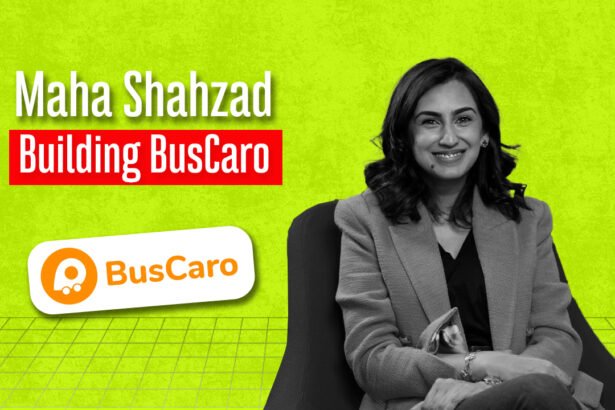
Maha Shahzad, founder and CEO of BusCaro, is at the forefront of tackling Pakistan’s pervasive transportation challenges for professionals and students, having built a mobility startup focused on positive unit economics. Her journey, marked by both accidental entry into the startup world and unwavering determination, offers profound insights and actionable lessons for entrepreneurs, especially those navigating dynamic markets in the MENA region.
The Genesis of a Mobility Vision
Maha’s venture into the startup ecosystem began serendipitously in 2013, joining Rocket Internet and Foodpanda in Pakistan. It was during this time that she encountered a significant personal hurdle: the arduous and costly daily commute, a problem she recognized was particularly acute for women. This firsthand experience ignited her passion for mobility.
Her career then led her to Careem, where she helped scale transportation solutions, but soon realized that even ride-hailing services only catered to a small segment of the population. Seeking a broader impact, she joined Swvl, a mass transit startup, eventually running its B2C business across Islamabad and Karachi.
Navigating the Turbulent Waters of Hyper-Growth and Exit
Maha’s tenure at Swvl provided invaluable lessons, particularly concerning market dynamics. Swvl launched in an era characterized by “easy money” and “high-burn” business models, where competition was fierce and unit economics often took a backseat. For instance, Swvl and Airlift, both entering Pakistan around the same time, engaged in aggressive competition that led to paying suppliers 3x market rates and charging customers as little as 10% of their actual propensity to pay.
A significant challenge for global companies like Swvl in a market like Pakistan was the burden of central costs. While local operating costs were generally lower, high central salaries and technology developed for diverse global markets proved disproportionately expensive for a “low-GM (Gross Merchandise Value)” market like Pakistan. Maha notes that the level of sophisticated tech needed in markets like the US was not necessarily required, or even adaptable, for Pakistan’s unique needs, hindering agility and increasing costs.
Despite these structural challenges, Pakistan proved to be a high-potential market for Swvl. At the time of its exit, Pakistan was Swvl’s highest bookings market globally, and Islamabad, a relatively small city, ranked second worldwide in bookings. The average trip fare for Swvl was also over 200 rupees, dispelling common misconceptions about unsustainably low prices. However, Swvl’s B2C operations were globally shut down, not solely due to Pakistan-specific issues.
The Birth of Buscaro- A No-Brainer Decision Fueled by Conviction
For Maha, Swvl’s exit was not a deterrent but a catalyst. She considered mobility to be the “biggest problem” in Pakistan, encompassing affordability, safety, and accessibility, areas where public infrastructure had largely failed. The rising costs of ride-hailing and skyrocketing fuel prices further amplified the need for affordable mass transit, which could spread costs among many passengers.
Maha had fought very hard to keep Swvl alive in Pakistan, personally renegotiating rates with captains and engaging with customers to gauge their willingness to pay higher fares for continued service. The overwhelming demand was evident: her personal LinkedIn received over 1,000 messages from women and fathers expressing despair over lost commute options. This deep-seated need for transportation options solidified her resolve.


Buscaro was launched the very next day with a single bus, managed initially via WhatsApp, demonstrating an unparalleled level of conviction and agility. That one bus eventually turned into thousands of vehicles operating across Karachi, Lahore, and Islamabad.
Buscaro’s Sustainable Model and Key Learnings
Maha engineered Buscaro to overcome the shortcomings of previous models, focusing on sustainability and local adaptation:
1. B2B2C and B2G Strategy for Customer Acquisition (CAC): Instead of costly direct-to-consumer acquisition, Buscaro partners with co-working spaces, offices, and universities. This B2B2C approach eliminates customer acquisition costs and provides highly predictable demand patterns, improving vehicle utilization. Buscaro also partners with schools, offering a parent app for tracking kids’ rides, and is now actively working on Business-to-Government (B2G) initiatives.
2. Tailored, Lean Technology: Maha realized that Pakistan needed distinct tech features. For example, monthly subscriptions, a common private market practice that could significantly boost utilization, were absent in global platforms. Buscaro prioritizes building essential, localized tech features in-house, collaborating with a tech partner (Next Gen), rather than adopting overly complex or ill-fitting global solutions. They even offer discounted fares for “tiny seats” to maximize bus utilization during peak hours.
3. Compelling Value for B2B Clients: For businesses, Buscaro offers reliability, security, and efficiency that local vendors often can’t match. A factory client, for instance, chose to pay Buscaro more because even a minute’s delay could cost them significantly. Buscaro provides a holistic solution, offering a range of vehicles from hatchbacks to various bus types to meet diverse client needs, simplifying their transportation management.
4. Profitability from Day One: Unlike the capital-intensive “burn money” models, Buscaro was forced to be lean, operating initially from Maha’s personal bank account for the first three months. This scarcity proved a “blessing in disguise,” embedding a strong focus on unit economics and profitability into the business’s DNA.
5. Unmatched Affordability: Buscaro provides transportation at an average price of 135 rupees per trip, a fraction of ride-hailing cars which can cost over 1,200 rupees for similar distances, offering a ~10% cost advantage for high-distance users. This makes mobility accessible to the 97% of the population who cannot afford ride-hailing.
6. Impressive Growth and Financial Health: Buscaro currently handles approximately 20,000 bookings a day. The company is EBITDA-level profitable in one of its three operating cities, contribution margin positive across the board, and has virtually no burn outside of tech costs. Despite receiving over 400 investor rejections initially, Buscaro successfully raised close to $1 million. Maha plans for Buscaro to be EBITDA profitable by Q1 of next year.
7. Mission-Driven Impact: Maha’s greatest enjoyment comes from the direct impact on people’s lives. She is driven by the fact that girls can go to school and individuals can get to work safely and affordably because of Buscaro, reducing dependency and fostering independence.
Challenges as a Pakistani Solo Founder !
Maha’s journey as a Pakistani solo founder has been particularly arduous:
• Initial Co-founder Exits and Emotional Toll: Maha initially had two co-founders who ultimately “got scared off” as “everyone was telling us not to do it,” leaving her as a solo founder. While enabling rapid decision-making, being a solo founder lacks the emotional support of a co-founder, something she misses the most.
• Fundraising Hurdles: Securing initial capital was incredibly tough. Investors were “begging” her to stop and even staged “interventions” due to market skepticism. Even after proving traction, investors often pushed for expansion into higher-GM markets, challenging her commitment to Pakistan. Maha had to bootstrap for many months, and her team’s unwavering conviction was crucial when she almost gave up.
• Economic Volatility: Operating amidst “absurd amounts of inflation” and widespread business shutdowns poses a constant challenge. Balancing affordable pricing for users against rising operating costs (fuel, wages) is a continuous tightrope walk.
• Government as a Roadblock: Rather than facilitating, the government has historically presented obstacles. Outdated regulations, such as a 15-20 rupee maximum fare for bus rides in Lahore, remain from decades past, making modern mass transit financially unviable. Maha emphasizes the need for legal recognition of mass mobility, legislation, and potential public-private partnerships for greater efficiency, though she would even “settle for them getting out of our way”.
• Talent Drain and Perception of Startups: Pakistan faces a significant “brain drain,” with talented individuals leaving for jobs offering “20 times the money” abroad. Furthermore, the visible failures of some startups in Pakistan have created a negative perception, making younger generations hesitant to join or commit to the startup ecosystem, preferring traditional jobs.
• Challenges as a Woman Founder in Pakistan: Maha acknowledges that Pakistan is unfortunately ranked as one of the worst countries for women in terms of gender equality. She believes the biggest systemic issue is that most women are not making money, which limits their financial freedom and, consequently, all other forms of freedom. Barriers include a lack of available childcare, limited opportunities, and alarmingly low literacy rates for women. Maha advocates for investing in micro-entrepreneurship opportunities for women (e.g., selling food or clothes from home) and providing them with the necessary tools, education, credit, and platforms.
What MENA Entrepreneurs, can learn from it !
Maha Shahzad’s story offers critical lessons for entrepreneurs in the MENA region, facing similar economic and regulatory landscapes:
1. Prioritize Unit Economics from Day One: Resist the temptation of hyper-scaling fueled by “easy money” without a clear path to profitability. Building a business with positive unit economics from inception, even if forced by limited capital, can be a “blessing in disguise”.
2. Localize, Don’t Blindly Globalize, Your Tech: Understand your market’s unique needs and adapt technology accordingly. Don’t blindly import global solutions that might be over-engineered, irrelevant, or expensive for your market. Build essential, localized features first.
3. Solve a Fundamental Problem Sustainably: Identify a pressing local problem (e.g., affordable, safe, accessible mobility) and devise a business model (like B2B2C or B2G) that inherently reduces key costs like customer acquisition.
4. Leverage Local Market Advantages: Don’t be swayed by the allure of “higher-GM markets” if your core expertise, deep local knowledge, and existing relationships are in your home market. These are powerful assets. Focus on solving the local problem first.
5. Cultivate a Strong, Loyal “Co-founding” Team: In challenging environments, your team is your greatest asset. Maha relies on a deeply loyal and experienced team, many of whom are former colleagues from previous mobility startups, acting as de facto “co-founders” and providing crucial support. Foster passion and a long-term commitment in your team, focusing on opportunity and learning over immediate high salaries.
6. Embrace Resilience in Fundraising: Be prepared for numerous rejections and periods of operating lean. Conviction, demonstrated traction, and a clear vision for sustainable growth will eventually attract investors.
7. Advocate for Regulatory Modernization: Engage with policymakers to highlight outdated regulations that stifle innovation and explore opportunities for public-private collaboration to improve essential services.
8. Be Mission-Driven and Impact-Focused: An unwavering focus on the positive impact your business has on people’s lives can be the most potent motivator, driving you and your team through the toughest challenges and providing immense personal satisfaction. For women founders, addressing systemic barriers like lack of childcare and financial exclusion can unlock significant economic potential.
Buscaro’s journey under Maha Shahzad’s leadership is a testament to the power of resilience, strategic adaptation, and a deep-seated commitment to solving local problems. Her story provides a compelling blueprint for entrepreneurs aiming to build impactful and sustainable businesses in complex markets like Pakistan and across the MENA region.