

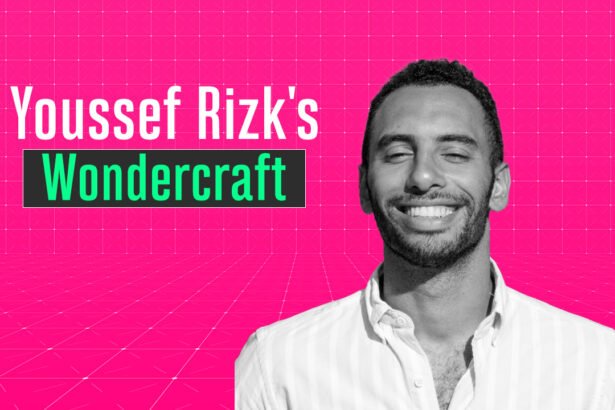
From the halls of one of the world’s top universities to the fast-paced environment of a leading tech company, and then into the high-stakes world of Y Combinator, Youssef Rizk’s entrepreneurial journey is a compelling narrative of ambition, resilience, and the power of a well-timed pivot. As the co-founder of the AI-powered audio and video creation platform, Wondercraft, his story offers a transparent look into the realities of building a startup, complete with tough lessons and invaluable insights, especially for aspiring entrepreneurs in the MENA region.
The Genesis -An Idea to Democratize Opportunity
Every startup story begins with a problem. For Youssef and his co-founder, whom he met while they were both working at the data analytics software company Palantir, the initial problem they wanted to solve was deeply rooted in creating equal opportunities. After four years at Palantir, a company known for its brilliant minds and intense work culture, Youssef felt the entrepreneurial itch. He and his flatmate decided to tackle a major barrier in the world of professional tennis: funding.
They observed that for a young tennis player to turn pro, they needed around $100,000 a year for travel, coaching, and tournament fees—a sum unattainable for most. This led to the birth of their first startup, Monashot. The concept was innovative: allow fans to invest in the future careers of emerging tennis players in exchange for a percentage of their future prize money. The mission was noble: to help talented individuals from less privileged backgrounds achieve their dreams. It was this compelling vision that earned them a coveted spot in one of the world’s most prestigious accelerators, Y Combinator (YC).
The YC application process was a whirlwind. Youssef and his partner conceived the idea and submitted their application within just a couple of days, complete with a hastily made, “cringey” video. Despite feeling like they were long shots, they landed an interview. The interview itself was an intense, 10-minute rapid-fire session where direct, concise answers were paramount. YC’s partners weren’t necessarily sold on the idea itself but were convinced by the founders’ potential and their compelling mission to empower individuals. They were accepted and offered $500,000, a move Youssef describes as a risk-reducing catalyst that made leaving his stable, well-paying job a feasible leap of faith.
The Monashot Challenge – Hitting a Wall
Armed with YC’s backing, the Monashot team dove in. The YC environment is structured around accountability; founders publicly state their goals for the upcoming two weeks and report back on their success or failure in front of their peers. For Monashot, the key metrics were clear: the number of players they could sign (supply) and the number of backers they could attract (demand).
However, they soon ran into significant, and ultimately insurmountable, roadblocks.
1. Playing Outside Their Strengths: As two software engineers, they had no deep domain expertise in the sports industry. This created a major disadvantage when trying to navigate the complex and often “toxic” world of sports agents and federations. They were outsiders in an industry built on relationships and insider knowledge.
2. The “Chicken and Egg” Problem: To attract backers, they needed a roster of talented players. But to attract top players, they needed to have a proven platform with ready investors. They struggled most with securing players, as talented athletes often had agents who could offer them better deals and more established pathways to success.



3. An Unscalable Market Model: The most critical flaw, which they initially dismissed, was the market size. To build a $100 million revenue company based on their commission model, they calculated they would need to sign 10,000 new athletes per year. This number was astronomical and unrealistic; even the largest, most established sports agencies in the world don’t manage that volume. “It was an impossible number,” Youssef admits. The model simply wasn’t scalable to the venture-backable level YC expects.
After nine months of relentless effort—including traveling to tournaments in New York and California to personally recruit players and backers—the writing was on the wall. The venture wasn’t working. The moment they decided to shut down Monashot was surprisingly not one of despair, but of immense relief. “The happiness I felt… I suddenly felt light,” Youssef recalls, describing the feeling of being freed from a venture that was no longer viable.
The Pivot – Leaning into Strengths with Wondercraft
The decision to pivot wasn’t a surrender; it was a strategic reset. Youssef and his partner gave themselves a one-and-a-half-month deadline to find a new idea or return the remaining funds to their investors. This time, they would follow a core lesson learned from Monashot’s failure: “Play to your strengths”. As technical founders, they turned their attention to the burgeoning field of Generative AI.
They rapidly prototyped several ideas, including a “Lawyer GPT,” but the one that gained the most traction was a tool for content creation. The new venture, Wondercraft, was born. Its mission is to make audio and video production effortlessly accessible. Using Wondercraft, a user can input a blog post or text, and the AI will generate a professional-sounding podcast, complete with a choice of voices, languages, and background music. The platform can also create short-form video clips for social media platforms like Instagram and Twitter, solving a major pain point for marketers and content creators.
The contrast with Monashot was stark. While Monashot struggled to find its footing, Wondercraft found market validation almost immediately. They started by building a Discord community and getting direct feedback from early users. Their approach was simple: build fast, get user feedback, and iterate. Within a week of launching a new feature, they aimed to have a paying customer using it.
This time, the pitch to investors was much easier. They weren’t selling a complex, unproven market model; they were demonstrating a tangible product that solved a clear problem in a massive and growing market.
What is in it for Entrepreneurs in the MENA Region ?
Youssef Rizk’s journey from Monashot’s struggles to Wondercraft’s promise offers several powerful lessons for founders, particularly those in the Middle East and North Africa.
1. Be Brutally Honest with Yourself and Your Metrics: The Monashot team initially had the data suggesting their market was too small but allowed their passion to override the facts.
Don’t fall in love with your idea so much that you ignore the numbers. Define your key metrics for success early on. If you’re consistently failing to meet them and the path to scale looks impossible, you must be honest with yourself. As Youssef puts it, “If you’re not seeing short-term traction and you don’t even see a long-term future, then you’re just hurting yourself”.
2. Play to Your Strengths: The Monashot team of two engineers failed in a relationship-driven sports industry. The same team is now thriving by building a cutting-edge tech product.
Your founding team’s unique skills are your greatest asset. Build a business where those skills give you an unfair advantage. If you’re a technical founder from the MENA region, lean into that. Build a product that is hard to replicate, rather than trying to compete in a market where you have no inherent edge.
3. The Founder Must Make the First Sale: Youssef emphasizes that in the early stages, the founders themselves must be the ones to understand the customer, their pain points, and how to sell the solution.
Don’t outsource your core business discovery. Before hiring a sales or business development team, you need to have a deep, personal understanding of your market. “If you can’t sell your own company, who can?” he asks. This hands-on approach is crucial for finding product-market fit.
4. Embrace Speed and Iteration: Wondercraft’s success is built on a cycle of rapid development and immediate user feedback.
Don’t wait to build the “perfect” product. Launch a minimum viable product (MVP), get it into the hands of real users, and listen intently to their feedback. In the AI space, where technology evolves daily, speed is your single greatest competitive advantage against larger, slower-moving corporations.
5. Don’t Fear Failure; View it as Data: The experience of shutting down Monashot was not a personal failure but a learning experience that directly informed the strategy for Wondercraft. Investors, especially experienced ones, understand that startups are risky; they are backing the founders’ ability to navigate challenges.
In the MENA region, where the fear of failure can sometimes be a cultural barrier, it’s crucial to reframe it. Every failed experiment provides data that brings you closer to a successful formula. As Youssef notes about his experience, even if the startup fails, the journey itself makes you a more valuable and attractive candidate than anyone else applying for the same corporate job.
Youssef Rizk’s story is not just about building an AI company; it’s a testament to the entrepreneurial spirit itself. It’s about having the courage to start, the humility to admit when you’re wrong, the resilience to pivot, and the wisdom to build upon the lessons learned along the way. For entrepreneurs everywhere, especially in the growing tech hubs of the MENA region, it’s a powerful reminder that the path to success is rarely a straight line, but the journey itself is where true growth happens