

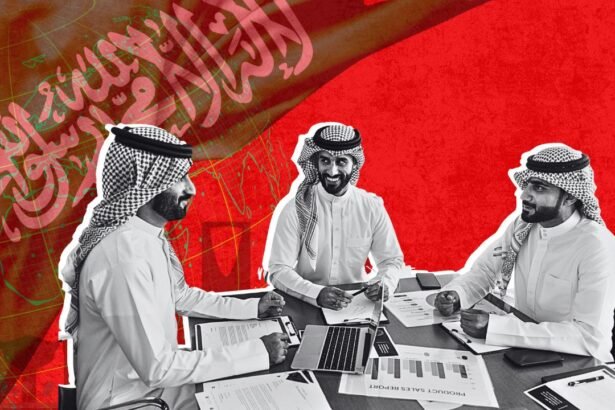
The transformation of Saudi Arabia’s economy is often measured in barrels of oil, but the real story of the last decade is measured in lines of code, rounds of funding, and the audacity of its ambition. However, less than ten years ago, the Kingdom’s startup scene was fragmented, risk-averse, and capital-starved. Today, it is the undisputed engine of the Middle East’s digital economy. Ultimately, this is the story of how Saudi Arabia built a VC powerhouse from the ground up.
The numbers are staggering. In the first half of 2025 alone, the Kingdom attracted a record-breaking $860 million in venture funding. It also captured 56% of all capital deployed across the entire MENA region. This isn’t just growth; it’s a gravitational shift. But how did this happen so fast? It wasn’t magic. It was a deliberate, state-engineered strategy based on five reinforcing pillars: Capital, Regulation, Infrastructure, Talent, and Culture.
Pillar 1 – The Capital Engine – Priming the Pump
The first hurdle for any emerging ecosystem is the “chicken and egg” problem: investors won’t deploy capital without good startups, and startups can’t grow without capital. Saudi Arabia solved this by becoming the market maker.
The establishment of the Saudi Venture Capital Company (SVC) in 2018 was the turning point. Operating as a “Fund of Funds,” SVC didn’t just pick winners; it backed the pickers—investing in VC funds to lower the barrier for private investors. The results speak for themselves. Since SVC’s inception, venture capital funding in the Kingdom has grown by a multiple of 21x, effectively jumpstarting the entire industry.
This sovereign backing ignited a chain reaction. By H1 2025, the ecosystem wasn’t just surviving; it was thriving independently of global downturns. While other markets contracted, Saudi Arabia saw a 116% year-over-year increase in funding. The market has matured to support “Mega Deals” (rounds over $100 million), such as the $250 million round for the q-commerce giant Ninja and the $160 million Series E for the fintech unicorn Tabby. This flood of liquidity proves that Saudi Arabia built a VC powerhouse capable of supporting startups from their first seed check all the way to a pre-IPO mega-round.
Pillar 2 – Regulatory Agility – From Red Tape to Red Carpet
Capital is cowardly; it flees uncertainty. Recognizing this, the Kingdom undertook a radical overhaul of its legal framework to roll out the red carpet for founders. The introduction of the New Companies Law was a game-changer. It introduced flexible corporate structures like the Simplified Joint Stock Company (SJSC), which removed arbitrary minimum capital requirements and allowed founders to protect their equity through varying classes of shares. Through MISA (Ministry of Investment) licenses, international founders can now own 100% of their Saudi entities, removing the historic need for a local sponsor.
Perhaps the most impactful move was the Saudi Central Bank (SAMA) Regulatory Sandbox. This “test-and-learn” environment allowed FinTech startups to experiment with innovative products without being crushed by full banking compliance immediately. It is no coincidence that FinTech was the top sector by deal count in H1 2025, witnessing a massive 275% increase in funding.
Furthermore, the Capital Market Authority (CMA) solved the “liquidity trap” by reforming the Nomu-Parallel Market. By easing listing requirements, they created a viable exit strategy for tech companies, proving to investors that their money wasn’t stuck—it could grow and eventually be harvested.


Pillar 3 – Infrastructure – The Physical and Digital Backbone
You cannot build a digital economy in a vacuum. You need collision points—places where developers, designers, and investors bump into each other and spark new ideas.
The crown jewel of this infrastructure is The Garage. Housed in a repurposed parking structure in Riyadh, it is now the largest startup district in the Middle East, spanning 28,000 square meters. It’s more than just a co-working space; it’s a vertically integrated ecosystem offering access to deep-tech labs, corporate partners, and global accelerators like Google for Startups.
Beyond Riyadh, institutions like KAUST (King Abdullah University of Science and Technology) act as deep-tech foundries, turning academic research into commercial ventures in sectors like agri-tech and sustainability. This physical density is a critical reason why Saudi Arabia built a VC powerhouse; it gave the digital community a physical home.
Pillar 4 – Talent – The Myth of the “Inexperienced Founder”
There is a misconception that the Saudi ecosystem is run by inexperienced college graduates. The data says otherwise. The 10 Years Saudi Arabia Founders Report reveals a highly educated, battle-hardened “Super Founder” profile.
- Experience Matters: 36% of founders in the top funded startups have 10+ years of professional experience before launching their companies. These are seasoned operators from Aramco, STC, and global consultancies who know how to navigate complex markets.
- Technical Depth: 59% of founders hold STEM degrees, ensuring they have the technical chops to build what they sell.
- Team Dynamics: The “solo genius” is largely a myth here; startups with two or more founders captured 53% of all capital, proving that teamwork is the currency of success.
- The Saudi-Pakistan Tech Corridor: A massive opportunity exists for Pakistani software houses and engineers to plug into the Saudi ecosystem. Saudi Arabia’s growing demand for digital infrastructure, meanwhile, intersects with Pakistan’s surplus of high-quality engineering talent. Together, this cross-border synergy is fueling growth for both nations.
This depth of talent ensures that the capital deployed is in safe, capable hands. It counters the narrative of “too much money, too few ideas”. It proves that Saudi Arabia built a VC powerhouse on human capital, not just oil wealth.
Pillar 5 – Culture – The Shift to Risk-Taking
Perhaps the hardest pillar to build is culture. How do you convince a population comfortable with secure public sector jobs to take the leap into entrepreneurship? You change the narrative.
Through massive global events like LEAP, which attracts hundreds of thousands of attendees, the Kingdom has glamourised and normalized entrepreneurship. The “fear of failure” is being replaced by a “fear of missing out.” The ecosystem is now seeing the rise of serial founders—entrepreneurs who exit one company and immediately start another.
This recycling of talent and ambition, in turn, is the heartbeat of any mature ecosystem. More importantly, it signifies that the cultural shift is permanent, and, as a result, it is a key reason why Saudi Arabia has built a VC powerhouse that is sustainable for the long term.
The Regional Pivot – Riyadh as the New Center of Gravity
The culmination of these five pillars is the “Saudi Pivot.” In H1 2025, Saudi Arabia didn’t just lead the region; it dominated it. The Kingdom captured 56% of total MENA funding and 37% of all transaction volume, creating a definitive gap between itself and historical hubs like the UAE.
This shift is offering massive opportunities for MENA founders. Startups like Colabs (originally from Pakistan) are not just setting up satellite offices; they are treating Riyadh as a primary growth market to access deep liquidity. The ecosystem has diversified beyond simple e-commerce into deep tech, sustainability, and logistics.
The Flywheel is Spinning
In less than a decade, Saudi Arabia has done what many thought impossible: it engineered a Silicon Valley–style ecosystem in the heart of the desert. First, by aligning sovereign capital with agile regulations and, furthermore, by building world-class infrastructure, the kingdom attracted deep talent. Moreover, a daring culture emerged alongside targeted policy reforms, and consequently Saudi Arabia built a VC powerhouse that is now, unsurprisingly, the envy of the region. In addition, coordinated investment, strategic partnerships, and rapid capacity-building helped accelerate startup formation and scale promising companies; ultimately, these combined efforts turned a bold vision into tangible success.
The “build” phase is over; the “scale” phase has begun. With exit avenues like M&A activity tripling in 2025 and a robust IPO pipeline on Nomu , the cycle of value creation is complete. The question for international investors and founders is no longer “Why Saudi Arabia?”—it is “Why aren’t you there yet?
References
- Why Riyadh and Saudi Arabia Are Rapidly Becoming a Global Startup Powerhouse
https://fi.co/insight/why-riyadh-and-saudi-arabia-are-rapidly-becoming-a-global-startup-powerhouse-insights - Saudi Arabia Tech Oasis: Exploring the Booming Tech Ecosystem
https://waveup.com/blog/saudi-arabia-tech-oasis/ - Fueling Transformation: How Venture Capital is Shaping Saudi Arabia’s Vision 2030 – InPeak Time
https://www.inpeaktime.com/fueling-transformation-how-venture-capital-is-shaping-saudi-arabias-vision-2030/ - How Saudi Arabia Is Turning Unicorn Capital into Innovation Sovereignty. | by martino.agostini | Medium
https://medium.com/@tarifabeach/how-saudi-arabia-is-turning-unicorn-capital-into-innovation-sovereignty-b940149f571f - State-led startup momentum poised for sustainable growth under Vision 2030 | Arab News
https://www.arabnews.com/node/2604376/business-economy - Unlocking-future-fintech-sa.pdf.coredownload.inline.pdf
https://assets.kpmg.com/content/dam/kpmgsites/sa/pdf/2024/09/unlocking-future-fintech-sa.pdf.coredownload.inline.pdf?hl=en-US