

The real estate market in Egypt holds a colossal paradox: an estimated 10 million unfinished residential units sit idle. This represents approximately 10 trillion Egyptian Pounds locked up in steel and concrete, generating zero revenue. If each unit housed four people, that’s enough space for 40 million people—roughly the population of a major European country like France.
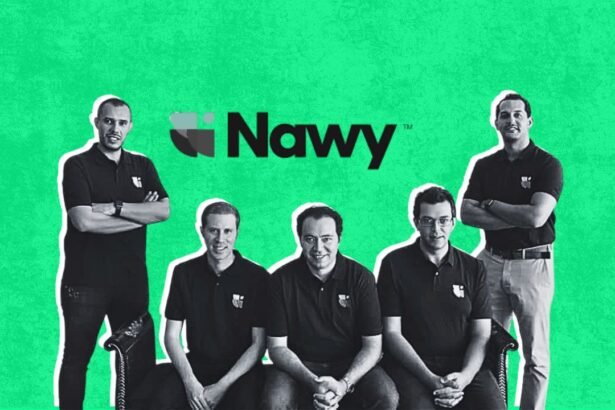
This massive pool of stalled assets presented an enormous opportunity, one that Mahmoud Abdel-Maksoud was uniquely positioned to tackle. His journey, from bootstrapping a finishing service called R.O.A. to orchestrating a strategic acquisition by PropTech giant Nawy, is a masterclass in product-market fit, process efficiency, and knowing when to scale up by partnering with the best.
The Accidental Entrepreneur
Mahmoud’s entrepreneurial path began almost by accident. After returning to Egypt, he initially planned to work with his family’s construction company, focusing on innovative systems like aluminum formworks to build floors quickly. His intention was brief – just three or four months of testing before heading back to America. However, the COVID-19 pandemic grounded him in Egypt.
His attempt to integrate with the family business lasted only five or six weeks. He quickly realized the challenge of differing visions and generational conflict. With limited professional experience, Mahmoud felt the future was unclear if he stayed. He decided to strike out on his own, focusing initially on design and fine finishing, launching the venture that would become R.O.A. (originally Easy Designs and Fine Finishes).
Diagnosing the Pain -Why the Industry Was “Miserable”
Mahmoud’s core insight was that the residential finishing industry was fundamentally broken. He described it as “miserable,” noting that no one who finished their home was truly happy with the experience.
The customer journey is often the hardest one anyone can endure. Homeowners face huge, ongoing costs, yet they often see little progress beyond basic concrete structures for long periods. Projects typically drag on for a year or more, even though technically they could be done in three months.
The primary bottlenecks, Mahmoud realized, were twofold: cash flow issues and pending decisions.
1. Decision Fatigue: Homeowners must make countless technical decisions, and not everyone is comfortable doing so. This leads to delays, arguments, and claims (“You delayed me,” “You changed the specs”).



2. Financial Overruns: Projects almost universally exceed their expected budget. Owners often delay payments because of unexpected costs or personal financial timings (like waiting for bonuses or budgeting around school fees or holidays). This stops construction cold.
The results of this inefficiency were stark: 82% of all construction projects face delays. Mahmoud realized that his initial R.O.A. model—providing design and finishing services—only contributed to the problem. Every project was customized, making scaling impossible. Furthermore, as a traditional contractor, his relationship with the homeowner was adversarial—”us against the other”.
He needed to eliminate conflict and align incentives to create a scalable business.
From Contractor to Capital Partner – The Nawy Unlocked Model
The game-changing idea was to generate returns from these “locked-up” properties. This required transforming the relationship from a service provider to a true partner.
The initial attempt was ambitious: Mahmoud would cover 100% of the finishing costs, rent the property, and share the rent. However, high demand quickly exhausted his capital. This necessitated the pivot to the final, highly effective model: Nawy Unlocked pays up to 50% of the finishing costs, and the owner pays the remaining 50%. They then partner to rent the property for five and a half years.
This partnership structure fundamentally aligns interests. Nawy Unlocked is responsible for everything, including maintenance and repairs, for the entire 5.5-year term. This crucial detail ensures that Nawy Unlocked focuses on optimization rather than over-design or cheap materials. If they cut corners on wiring or plumbing, they pay for the repairs later. The goal is not to create the “best looking” house but the most efficiently finished house that commands a good rental rate.
Proof of Concept – Speed Kills (Slow Projects)
Mahmoud started R.O.A. (pre-acquisition) with an intense conviction, even manifesting success before securing his first job. He acquired his first client through word-of-mouth (a colleague of a cousin’s wife). At this point, he didn’t even have official company registration or a tax card; he secured those after signing the first contract. He had to constantly present himself as a large, established company, frequently changing clothes between dusty construction sites and client meetings.
His first project, two units in New Giza, was a critical proof point. It was finished in seven weeks. Within a few months (started around October 15th, leased January 1st), the unit was rented.
This project validated the core concept: a unit can be completed in two months if cash flow and pending decisions are removed. Furthermore, it proved to be an excellent investment product, offering returns of 30%, which was three times the 11% interest rate offered by banks at the time. When the dollar exchange rate was volatile, construction costs rose, but these losses were consistently recovered through increasing rental prices.
Scaling the “Finishing Factory”
To achieve the speed necessary to profit (since the contract is time-based, every month lost to construction costs Nawy Unlocked revenue), they had to systematize the process. If the process remained customizable, scaling was impossible.
Mahmoud aimed to turn the finishing process into a “finishing factory”. This meant:
1. Standardized Decisions: All material and design choices are standardized.
2. Unified Specifications (Specs): Technical drawings are unified across projects (e.g., electrical outlet heights are the same in every house), allowing contractors to memorize the process.
This repetition and standardization led to an average construction time of four to four and a half months.
Growth was fueled by internal efficiencies and word-of-mouth, not marketing. Mahmoud intentionally avoided large-scale marketing campaigns because he lacked the capital to finance finishing projects if demand spiked too quickly.
Eventually, his brother Mohamed joined, taking a major career risk right after having his first baby. With Mohamed on board, R.O.A. rapidly doubled its projects from 30 to 64 units in just five or six months.
The Acquisition – Knowing When to Partner Up
The introduction to Nawy came through Client Number 4, Faiza, who was a Nawy board member. After successfully completing her unit, Mahmoud reached out again to Nawy co-founder Belal El-Beltaqy.
In their second meeting, Beltaqy surprised Mahmoud and Mohamed by stating he wasn’t interested in a commercial agreement—he wanted to buy the company. Mahmoud was initially resistant: “We are not looking to sell the company; it is still early”.
The decision to sell, even when the business was successful (64 homes completed in about a year), came from a profound moment of self-awareness. Mahmoud realized that the structure and know-how he had built, while effective for 64 units, was incapable of handling the scale of 300, 3,000, or 10,000 units. A family friend had cautioned him: “What got you to 60 is not what will get you to 300”.
Nawy had the necessary vision, expertise, and ecosystem (listings, primary sales, brokerage, mortgage products) to tackle the full scope of Egypt’s real estate market. Mahmoud’s personal ambition shifted from managing a few hundred units to becoming the largest landlord in Egypt, holding 10,000 leased units. This grand vision was only possible by integrating into Nawy’s platform. The negotiation process was smooth, driven by Beltaqy’s conviction that the acquisition was a clear win-win situation.
Post-Acquisition Evolution and New Challenges
The acquisition transformed Mahmoud’s role and the nature of his daily problems. Previously, he was a one-man show, handling everything from contracting and dealing with laborers to meeting clients and banking. Now, Nawy Unlocked is a core part of the Nawy ecosystem, managed by a team that reached 60 employees.
His challenges shifted entirely:
- Learning to delegate.
- Setting a clear vision.
- Building effective organizational structures.
- Managing corporate efficiency versus the intimacy of a private business.
The team leveraged Nawy’s resources to conduct detailed market research on the rental demographic, which was often overlooked by others. They discovered that renters are diverse: grandparents moving closer to family, teachers seeking housing near work, expats, or people waiting years for their own homes to be delivered. By understanding this complex demographic—and differentiating needs (e.g., a luxury unit renter in a New Giza golf community requires different amenities than a modest two-bedroom renter elsewhere)—Nawy Unlocked can optimize finishes for maximum speed and rental value.
What is in it for MENA Entrepreneurs ?
Mahmoud Abdel-Maksoud’s journey provides several powerful lessons for entrepreneurs operating in the dynamic and challenging MENA region:
1. Solve Real Conflict by Aligning Incentives: The traditional service model pits the client against the provider. By creating a partnership where both parties share risk and reward (e.g., the 50/50 cost split and the 5.5-year maintenance guarantee), you create a win-win system that drives quality and efficiency. Lesson: If your incentives are not perfectly aligned with your customer’s long-term success, your business is not scalable.
2. Standardization is the Key to Scale: Customization might satisfy one client, but it cripples growth. Mahmoud successfully standardized every technical specification—down to the height of electrical sockets—to turn an inherently complex process into a “factory-like” operation. This reduced construction time from over a year to four months. Lesson: Identify repetitive processes in your industry and standardize them; repetition builds institutional muscle.
3. Speed is a Proven Investment Product: By solving cash flow and decision delays, Mahmoud proved that finishing a property in two to four months can generate a 30% return, significantly beating traditional, passive bank investments. Lesson: If your solution solves a time constraint and generates superior returns, you have a powerful value proposition.
4. Know Your Limitations and Embrace Strategic Partnerships: Mahmoud realized that his capacity to build structure and hire necessary executives was lagging behind his growth ambition (10,000 units). Instead of struggling for decades, he joined Nawy to instantly achieve the scale and organizational depth required. Lesson: What gets you to 60 units won’t get you to 3,000. Be honest about your structural limitations and don’t be afraid to partner or exit early to achieve a much larger, faster impact.
5. Ownership Drives Results (Delegation Requires Accountability): Post-acquisition, Mahmoud learned that successful integration and scaling depend on establishing clear ownership. If a product or function lacks a dedicated owner who wakes up thinking about it, it will stall. Lesson: Define “Project Owners” for every critical business line or strategic objective; delegation fails without clear, accountable ownership.
Mahmoud’s journey with R.O.A./Nawy Unlocked illustrates how transforming a high-friction industry requires more than just innovation—it demands a restructured partnership model, hyper-efficiency, and the humility to realize that sometimes, the fastest path to conquering a 10-trillion-pound market is by joining forces with those who already possess the infrastructure.
The story of Nawy Unlocked is like watching an amateur carpenter realize they need access to a specialized factory to truly mass-produce high-quality homes. The carpenter, Mahmoud, was brilliantly skilled at building a strong prototype (the 64 units) and perfecting the assembly line (the finishing factory), but to meet the demand of the entire city, he needed the financing, distribution network, and specialized management team that Nawy provided. The acquisition wasn’t the end of his vision; it was the mechanism that unlocked its true scale.